Why Gatekeeping in Skateboarding Is a Good Thing
This Is Not Your Mom’s Book Club
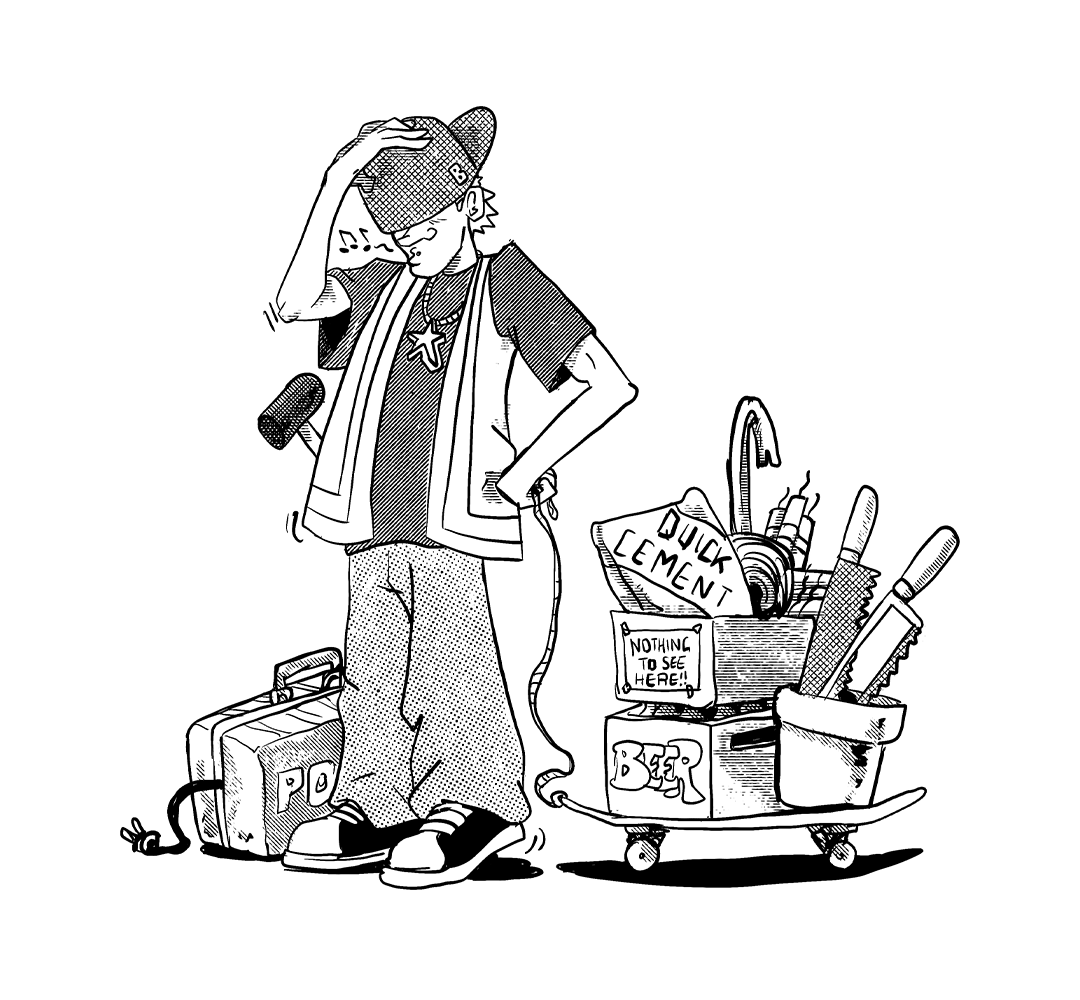
Skateboarding is an inherently painful activity that requires absurd amounts of failure and grit to achieve even basic competency. Every skateboarder can remember the first time they stood on the tail of their skateboard at the top of a quarter pipe that felt a little too high and a little too steep, scared absolutely shitless by the thought of having to drop in. It’s right to be scared: the first drop-ins tend to end in strained tailbones and deep purple hematomas in the butt vicinity. And we’re not even talking about doing flip tricks or sliding down a rail. Those are advanced skills that can seriously fuck up your shins or end family plans prematurely. If you want to learn how to skateboard, you’re going to get your sorry ass kicked by a piece of wood. Skateboarding can be miserable, physically and emotionally, even if you’re skating at a professional level.
Every skater knows the suffering that comes with skateboarding. This suffering creates a bond, and this bond results in a community. Shared pain, shared stories. It doesn’t matter where you're from, as long as you took the same painful route to get here. And you only get to be a part of this community when you’ve gone through the getting-your-ass-kicked-by-a-piece-of-wood part. There’s no shortcut. It’s pretty simple: if your ass ain’t the color of Powerade Grape, and your shins don’t make your teachers wonder whether to call child protection services, you have zero business in skateboarding, and skateboarders are right to reject you from their subculture.
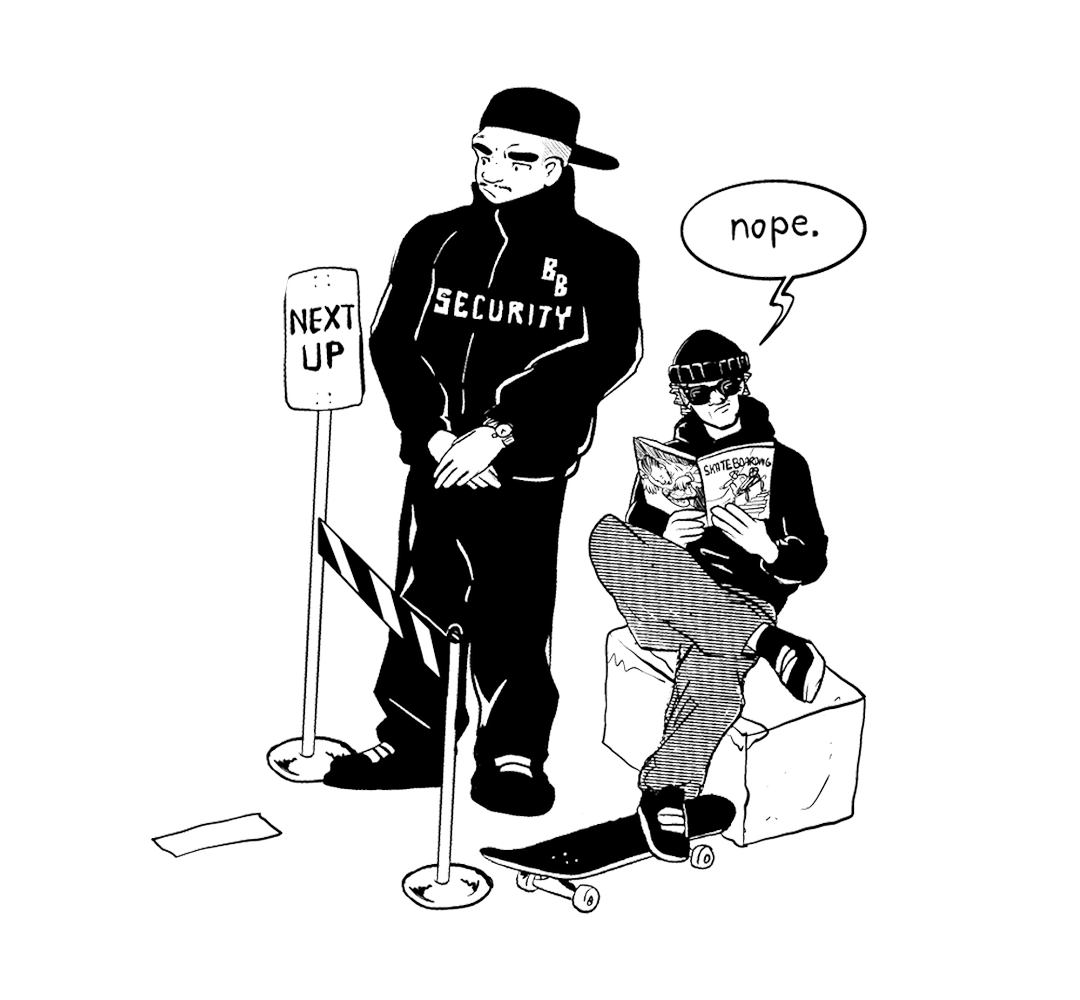
Rejecting people who don’t belong is called gatekeeping, and people usually speak of gatekeeping in an accusatory tone. It carries an undertone of discrimination against others; it divides the world into in-groups and out-groups. Gatekeeping’s not a friendly word. Wouldn’t it be great if we were all nice and friendly with one another? Can’t we just let anyone be part of our skateboarding community? Sorry, guys, but no.
Although it’s true, gatekeeping can be discriminatory when it creates arbitrary rules to cut others off from resources and opportunities just so that those who gatekeep can stay in control. One of the most famous examples is keeping women off executive boards: in Germany, more men named Thomas sit on executive boards than women. It’s a question of power: if those who gatekeep have all the power and all the privilege, if they’re already part of the majority, gatekeeping becomes discriminatory and leads to an unfair distribution of opportunities.
But skateboarding’s not a major sport. Some argue it’s not even a sport at all (although that remains open to debate). Skateboarding might be strenuous physical exercise, but that’s also true for jacking off upside down. Rather, skateboarding is shaped by its communities and local cultures, which are always small fractions of the general population. Skateboarding’s nowhere near as popular as soccer or basketball. There is no governing body that regulates what skateboarding is and what skateboarding is not. There’s no official spokesperson who speaks for skateboarding. That’s a good thing: skateboarding can be whatever you want it to be. Unfortunately, this lack of structure and institutional cohesion is also skateboarding’s vulnerability. It’s why skateboarding can be easily exploited from the outside, mined for coolness and authenticity. It’s why it can be marketed six ways to Sunday by major corporations, and nobody official will step in and tell them to fuck right off and milk someone else’s hobby for all it’s worth. It’s why someone who’s never had a torn ACL from overstepping a kickflip can come in, wave money around, and buy themselves into skateboarding. Unless skateboarders do something about it.
With that in mind, gatekeeping doesn’t sound so bad anymore, does it? Skateboarding communities don’t necessarily want to keep individuals out — although in some cases, even excluding certain individuals is fair game: some people sense that skateboarding is a cool sport and that skateboarders carry an air of rebelliousness and non-conformity, but they’re not really getting why that is. They only know that if they want to be perceived as cool, or rebellious, or different, that skateboarding can provide them with the appropriate aura. Others are more athletes than skateboarders, and even though they can skate (and in some cases, really, really well), they’re not as representative of skateboarding culture as a whole but rather of a sanitized and marketable version of it. The problem with both types is not that they’re into skateboarding — the problem is that more often than not, they’re trying to influence skateboarding. And if they’re powerful enough, and backed by major sportswear corporations, they just might be successful.
That’s why more than anything, skateboarding communities that successful gatekeep do so because they want to keep the culture real—in the sense that skateboarding is a blend of different sub-subcultures and styles, and not some streamlined, sanitized thing you can slap a price tag on. It’s not HYROX. Gatekeeping is literally what keeps skateboarding from becoming an official institution and from becoming more boring than your mom’s book club. Gatekeeping acts as a filter that keeps the communities close. Like an exclusive nightclub, not anyone can walk right in. They have to prove that they belong.
Of course, you can’t go overboard with the gatekeeping. Your subculture, skateboarding or otherwise, has to be semipermeable in order to let new influences shape the thing you love. Without outside influence and fresh blood, there’s going to be a standstill—and, by the way, that’s exactly the thing we already talked about in a different post on this website. Sometimes, you gotta open the window and let in fresh air. You could argue that skateboarding might be in need of a little more gatekeeping lately. So what’s keeping you?
Text by Joseph Möller
Illustrations by Sebastian Fuchs